


 Progress:

Our design trend predictions for 2026
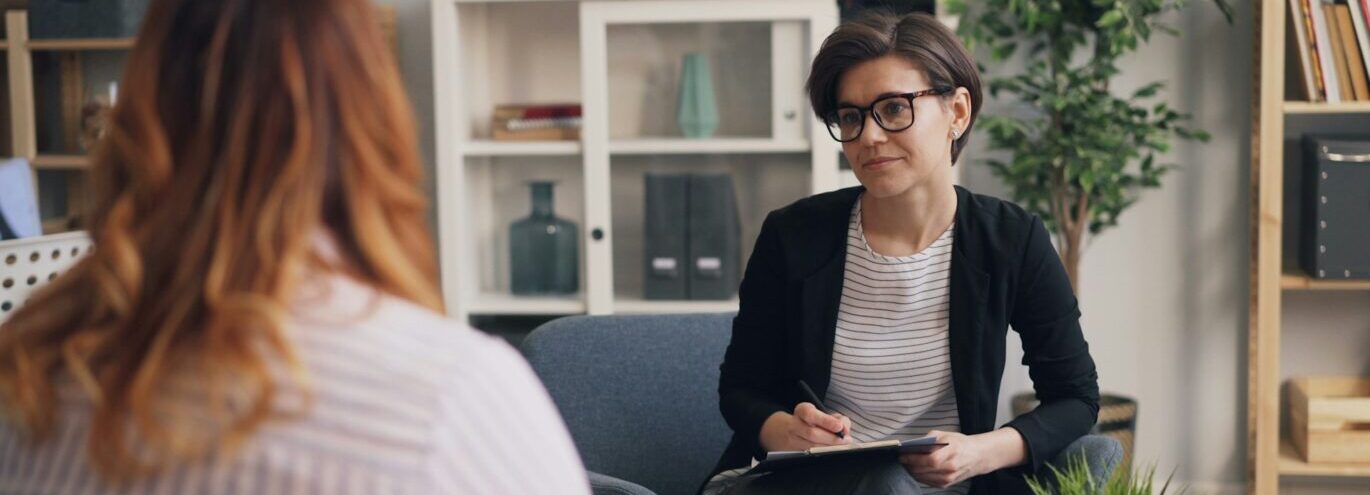
Every year, a handful of McGuffin designers get together for a roundtable on creative trends for the year to come — what’s intriguing them, what trends they’re encountering more out in the world and what styles they see (or want to see) going away for good.
Before we get into our predictions for 2026, let’s take a look back at how our 2025 forecast held up.
Reflecting on our 2025 predictions:
1. Our top pick for 2025 was AI and it remains the same for 2026.
We used AI in 2025 for more than we even thought possible at the time of our last roundtable. It’s clear that AI can be used to save time and speed up work, but when to lean on AI is still something designers are actively weighing every day:
Sid Sidani: I’m thinking about a concept that I pitched one time that I just couldn’t find an image to demonstrate. I didn’t have the technical skill or the time to create that. And so that’s when I leaned on AI, when it’s a step farther than I am capable of doing on my own.
Chris Sculles: We’re using it beyond just concepts now. We’re using it for voiceover, using a system where we’re paying a voice actor, they’re getting royalties for their voice, which makes us feel, you know, there is a human element, and that person is getting some royalties for it, but they’re not reading every piece.
Valerie Rausch: To Chris’s point, it’s going beyond just concepting. I worked on a set of print pieces, and we ended up doing this sculptural emboss. It was my idea, and I couldn’t find anything to visually represent this for them [client] to see and buy in on it. So I had to create something [using AI], and it took a lot of different rounds of revisions to get to something that I wanted. And the client wanted it exactly like that…I don’t know if I would have expected that a year ago or been comfortable doing that.
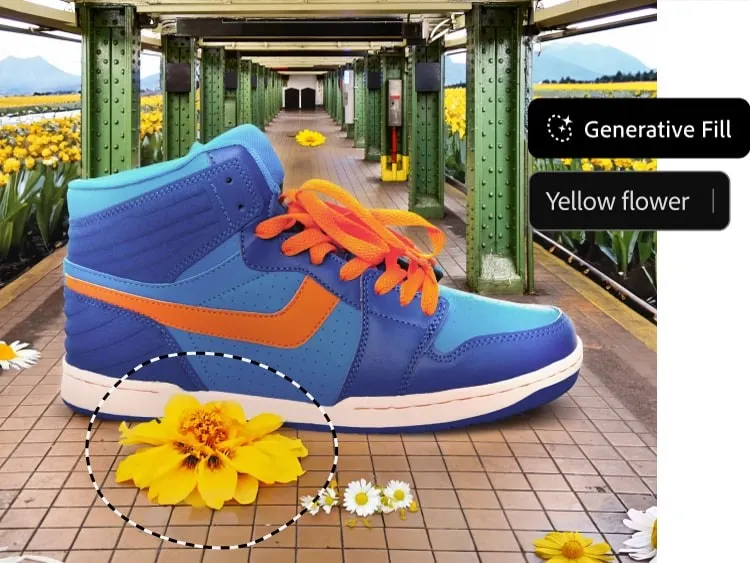
Bob Sprecher: If you were to ask me a year ago, would I be writing code with AI [for website design elements], I would say I don’t know what you’re talking about! But I couldn’t find anything like what I was looking for, especially with the colors and slow-moving looping animation. After searching high and low, I ended up coding it myself [using AI apps], and I was really impressed and happy with the results and was like, okay, maybe AI can do it.
Valerie Rausch: I mean, it’s a part of our lives now, for sure. It’s real, and we talk about it a lot. How do we use it as output, how do we use AI as designers? It’s not shameful to use AI, but how do I use it so it’s lined up with my values and how it makes sense for me?
Emily Cullitan: Using or not using AI has become a very active decision [as a designer]. I think it also can take away from some of the authenticity and the human touch behind the artists that we might typically use for illustration, etc. It’s just kind of an everyday battle as a designer with AI.
2. We also noted how AI continued to bring about distrust in 2025 and likely into 2026.
Valerie Rausch: We could never have predicted how big AI was gonna get so fast this year and how many big brands would use it or how good it would get.
Chris Sculles: And, of course, we’re seeing more of it [AI]. It’s getting better. It’s actually… some of it’s getting hard to even see. Some of it, you’re like, is it even AI?
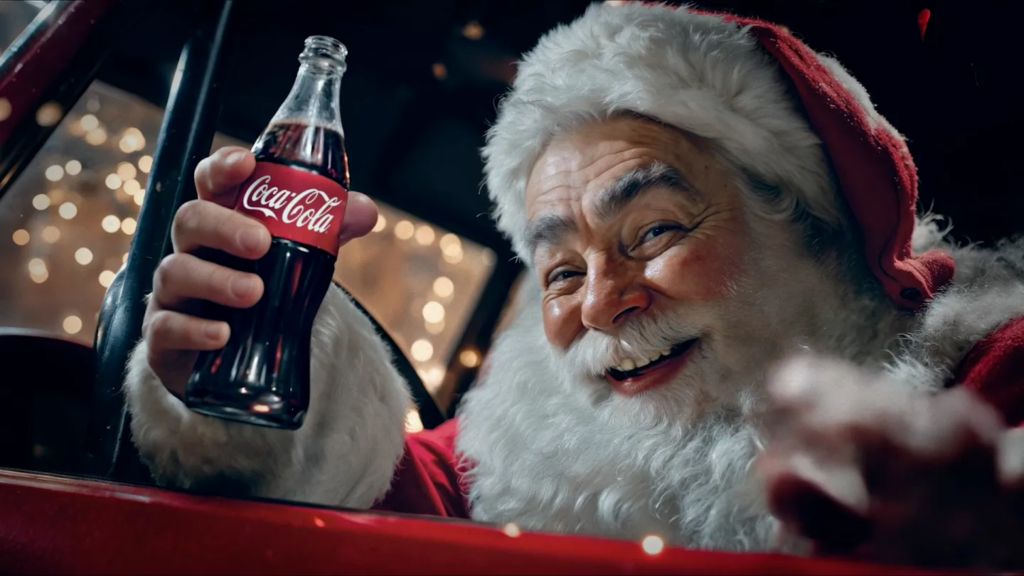
Sid Sidani: I still see crazy backlash for it. Like that Coca-Cola ad was completely AI-generated. People hated that they did it last year, and they hate it again even more this year. I think it’s interesting that they did it in 2024, got a lot of flack for it, and decided they would do it again in 2025. It’s just an interesting choice.
Valerie Rausch: Well, that brings up an interesting concept, too, where we start to question everything.
Bob Sprecher: See, and then I often wonder… is AI just aggravating people? Because you can’t tell if you’re the butt of a joke, you know? We don’t like being tricked. And I feel like I’m being tricked constantly.
3. We see an increased desire for authenticity in advertising and design in 2026, just as we did in 2025. But when it comes to the trend of “anti-design,” we see it dying down this year.
Emily Cullitan: For anti-design, in my experience, I feel like it was kind of a big blow-up of a few months, especially with the Brat album coming out… and then that Nutter Butter TikTok takeover, if you all remember that. But otherwise, I don’t necessarily see as much of it as the other trends.
Sid Sidani: I see it in some of — not necessarily design in the way that we usually think of it — but in video editing a lot. The whole promo video for this podcast interview was just the moments of them breathing, and not actually saying anything. And it’s kind of hysterical and crazy for this context.
Chris Sculles: Well, if we’re talking about authenticity, if Dr. Pepper Baby does not show up on the Super Bowl, I’m gonna be pissed. Note: This conversation happened before Dr. Pepper Baby aired during the 2026 College Football Playoff National Championship on ESPN on January 19, 2026. Chris was very happy.
Trends on the rise in 2026:
1. Motion and movement to engage distracted audiences
We’ve become conditioned to expect motion in our content and advertising, especially in our social media feeds. We’re expecting to see more movement and the idea of movement incorporated into everything design — LinkedIn ads, logos, typography, even further animation layered onto existing video content for an extra edge.
Emily Cullitan: I wonder if motion will be used even more. Everyone’s consuming videos as content, and just how social media’s totally changed…I’m not even thinking of, you know, going and filming something outside. I’m thinking of just animation, just ways to animate type even, to enhance ads.
Bob Sprecher: Taking that to the next level is gonna be the next…Everything needs to move now… we just expect it. Every time we do something static, we have this conversation, can we animate that?
Sid Sidani: With this idea of movement, something that I see a lot… makes me think of the term cybersigilism, which is a type of tattoo trend. I see a lot of this kind of flowy, somewhat illegible type that has become very on trend. It’s all over Pinterest, but I see it all over my LinkedIn feed, too. They’re calling it liquid typography here. But I think it goes very well with this idea of movement.
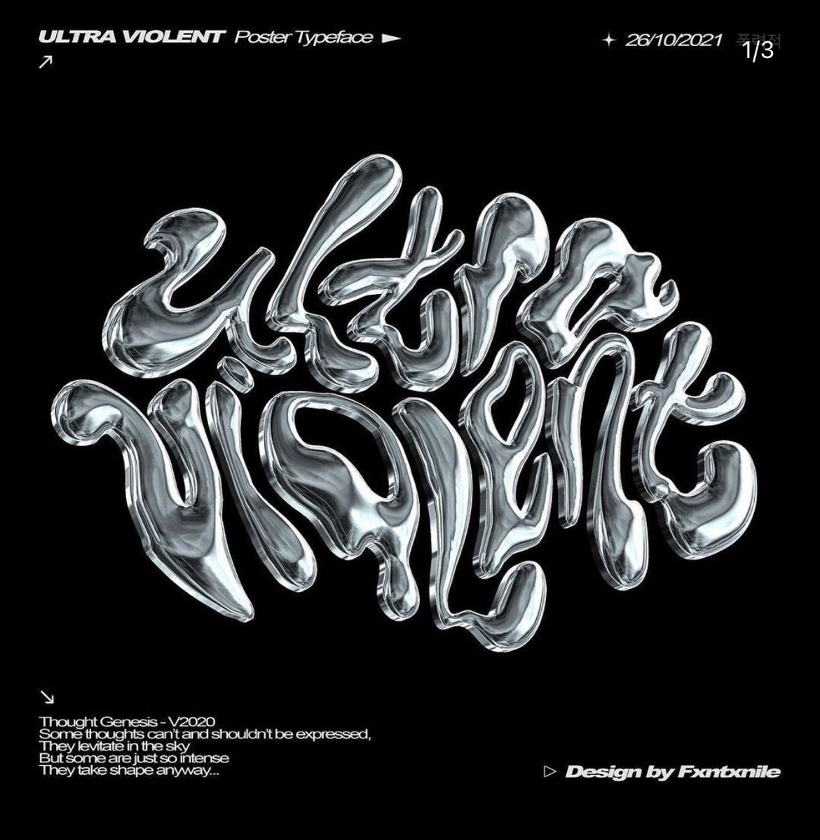
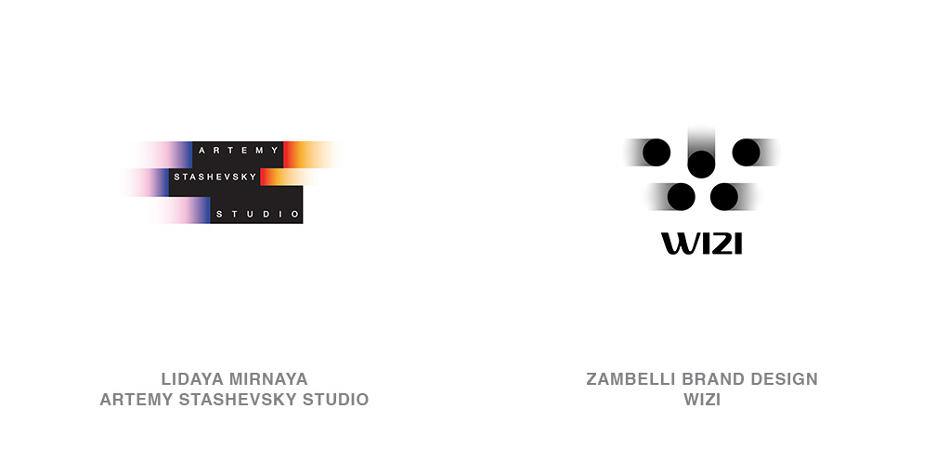
Chris Sculles: It gives a feeling of motion. I’ve seen some logos that are almost like a trend of motion. And it’s not real motion, it’s like the logo is moving — blur tails. I don’t love it, but it’s basically taking letter forms and kind of just bending them so they look like they’re moving.
Sid Sidani: Yeah, gradients, the liquid glass thing. They powered through 2025, and I think they will stay for most of 2026. So many people are using gradients to represent AI in general, and innovation in general. I mean, it’s in Copilot, it’s in Apple, I see it everywhere.
2. Social and political pressure on design
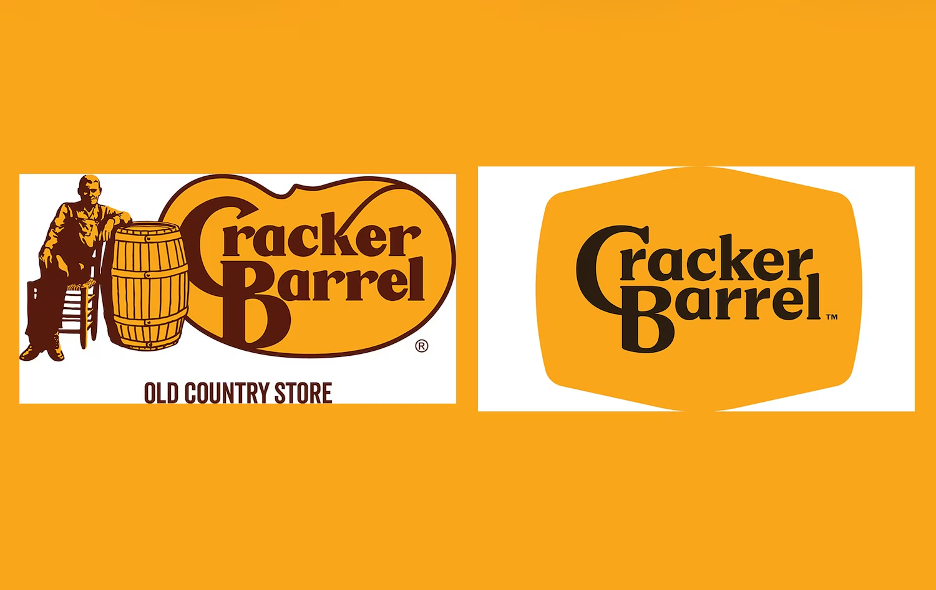
In 2025, there were two significant design-related scandals that made headlines: the simplification of the Cracker Barrel logo and the move from Calibri to Times New Roman by the U.S. State Department. As marketers, we’re trying to get people to notice our work and feel something about a brand. So this enhanced, politicized attention to design is new and we think it’s here to stay. Our advice is to always, always poke holes in your design choices and test with your target audience so what you create is future-proofed.
Emily Cullitan: I feel like we’ve gotten to a point in some ways where people are just creating cool brands without actually testing. You also have to really know a brand, you have to really know your audience, you have to really test what you’re designing before you just put it out there in the public eye, and it seems like there’s a little bit less intention there.
Sid Sidani: I had to double-check what year it was, because oh my gosh, 2025 was a blur, but the “Sydney Sweeney has great jeans” ad happened and that was very controversial, that was talked about for literally the whole year. I think it’s a really good example of politicized creative and the importance of being socially in touch.
Chris Sculles: This all has to do with social media and it becoming politicized design. Cracker Barrel, the State Department font…Yeah, because Calibri is a more accessible font, so then they came back and said, nope, we’re going back to Times New Roman.
Sid Sidani: I mean, we literally talked about it in that article we wrote…that the reason that Serif isn’t typically used on web is that it’s harder to read. It works better for print. Yeah, I don’t know if people would’ve cared if it went from Calibri to Times New Roman if we weren’t in the political moment that we’re in.
3. More behind the scenes looks for transparency and authenticity
As we start to question whether everything is AI or not, we think brands and creators will begin to provide more peeks behind the creative process curtain. For non-AI enhanced work, to prove it’s “real,” and for AI-enhanced work to show the iterative nature of how you get from prompt to result.
Valerie Rausch: I wonder if some more behind the scenes stuff is gonna trend, to showcase that something wasn’t created by AI. I’m thinking of the Apple TV video [creating a glass logo]…it looked so good that they had to show that it wasn’t AI, it wasn’t digitally created, they did it in real life. But I also think that could be a case for people who are using AI, and transparency around that, of saying here’s how I created this, and these are all the prompts I used, here’s all the alterations I did, and, you know? I’m already seeing some of this stuff, so I wonder if that’s gonna continue a lot more.
Bob Sprecher: It’s like storytelling of the creation.
Chris Sculles: So, making it for real, where they actually cut the apple out of glass, they took a film crew…the maker in me just loves the fact that they did it that way, because they didn’t have to. That was such a huge production. We’re looking at it like as if they shot a piece of glass, but the production that they put into that was over the top.
Thanks to our team members for their insights: Emily Cullitan (Senior Designer), Valerie Rausch (Creative Director), Chris Sculles (President), Sid Sidani (Art Director), Bob Sprecher (Chief Creative Officer)